Essay · 8 May 2026
What Hauora Māori taught me about the city I grew up in
Studying Indigenous housing policy in Aotearoa changed how I see Medellín. This is not an academic comparison: it is a reflection on what happens when one country's framework helps you see another country differently.
Hauora Māori was one of my favourite papers in my postgraduate diploma. I learned a lot about Te Tiriti o Waitangi, Māori experiences of the health system, and the history behind housing in Aotearoa. It also changed how I think about wellbeing, especially when it comes from frameworks that are different from what I had been trained in.
For this paper, I wrote an essay on Māori housing and its impact on hauora Māori. The feedback encouraged me to include more about Indigenous experiences in my own country. I was excited to write this post, because it gave me a chance to bring Medellín into the same conversation as Aotearoa.
I want to be clear from the start. This is not an academic comparison. That essay was academic. This is more of a reflection.
What Hauora Māori made me notice
This paper asked us to think about housing as a health issue, not just a property issue.
One of the key ideas was Te Whare Tapa Whā, a model of health developed by Sir Mason Durie. It sees wellbeing as having four parts: physical health, mental and emotional health, family and social wellbeing, and spiritual wellbeing.
In my essay, I looked at how housing affects all of these. Cold and damp homes affect physical health. Housing stress affects mental health. Overcrowding affects family life. And being disconnected from land affects spiritual wellbeing.
Before this course, I mostly thought about housing in a simple way: cold homes cause illness, overcrowding spreads disease, and poor housing leads to worse health.
That is true, but it is not the full picture.
Te Whare Tapa Whā helped me see that housing affects people in deeper ways too. It affects identity, relationships, and wellbeing in ways that are not always easy to measure.
The Māori housing work I studied (like papakāinga housing and Whai Kāinga Whai Oranga) made more sense once I understood this. They are not just housing projects. They are wellbeing projects built through housing.
This way of thinking is something I wanted to bring back to Medellín.
Indigenous Medellín, for people who do not know it
Colombia is officially a country made up of many cultures and ethnic groups. It recognises over 100 Indigenous peoples and nearly 2 million Indigenous people in total.
On paper, there are strong protections. Indigenous territories are recognised by law. Governments are supposed to consult Indigenous communities on major projects. Indigenous groups also have a level of autonomy.
But in practice, many of these rights are uneven, especially for Indigenous people who no longer live on their ancestral land.
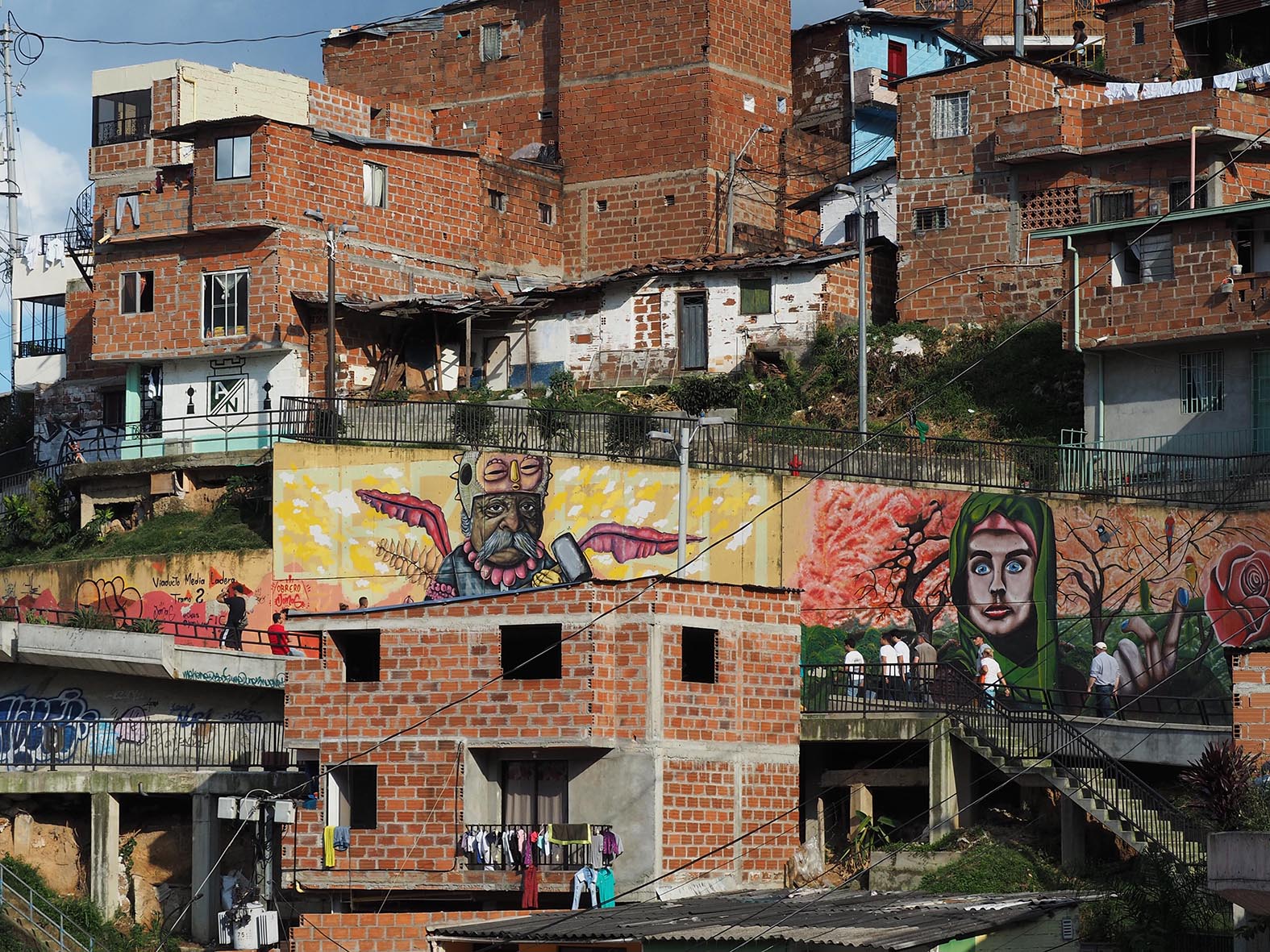
Medellín is one of those places where many Indigenous people now live.
Most came because of forced displacement caused by armed conflict and land pressure. The Emberá people, in particular, were pushed out of their territories in regions like Chocó and Risaralda. Today, Indigenous people from many nations live in Medellín, often in informal settlements on the edges of the city.
Some families have ended up in very unstable housing, including short-term rented rooms shared between multiple families, or in temporary street settlements in public spaces.
There have been efforts to support return to home territories, but the scale of displacement is still much larger than the solutions.
The point is not that things are fixed. It is that there is ongoing effort, even if it is incomplete.
What Medellín has been doing
One of the most important Indigenous organisations in Medellín is the Cabildo Indígena Chibcariwak. It was created in 1979, before Colombia even recognised Indigenous rights in its constitution.
It brings together Indigenous people from many different nations and supports cultural life, advocacy, and self-governance within the city. It works through what is called a Life Plan, which is a community-led plan that sets priorities for the future.
There are now several Indigenous cabildos in Medellín, reflecting how diverse the Indigenous population has become in the city.
The city government also has an ethnic affairs office that supports Indigenous, Afro-Colombian, and other ethnic communities. It runs outreach programmes, community visits, and some housing support.
The scale is still small, but it is real. It includes support for students, funding for community projects, and services that go directly into neighbourhoods rather than expecting people to navigate the system themselves.
At a broader level, Medellín has also changed through citywide investment in public transport and neighbourhood infrastructure. Cable cars, libraries, escalators in hillside communities, and upgraded public spaces have all improved access to the city for people living in poorer areas.
This did not directly solve Indigenous housing, but it improved the conditions many Indigenous families are living in.
What Medellín could learn from Aotearoa
There are a few ideas from Aotearoa that feel relevant.
The first is papakāinga housing. This is communal housing built by whānau on their own land. It is owned and designed by the people it serves, not just delivered to them.
A similar idea in Colombia could be Indigenous-led housing on urban land controlled by cabildos. It would not solve everything, but it would shift control back toward communities.
The second is Māori-led housing funding, where investment is used to strengthen Indigenous organisations so they can build and manage housing themselves. The key idea is not just building houses for people, but building the ability of communities to do it themselves.
The third is using wellbeing frameworks like Te Whare Tapa Whā at the design stage of housing projects, not just as a way of measuring outcomes afterwards.
These ideas are not directly transferable, but they offer a different way of thinking about what housing is for.
What I have come to think
There is a moment in learning about another country where you start to see your own country differently.
This paper did that for me.
It helped me see that Indigenous policy is not just about services or support. It is about power, design, and who gets to decide what housing and wellbeing look like.
Medellín is doing more than it is often given credit for. Indigenous organisations are long-standing and active. The city has made real improvements in infrastructure and access.
But there is still a gap between supporting Indigenous people and actually giving them control over housing design and delivery.
Aotearoa is not perfect, but there are ideas there that are worth paying attention to.
And for me, the most important part of studying Hauora Māori was not just what it taught me about Aotearoa, but how it changed the way I see the place I grew up in.
~
Johanna Escudero Pino is a Wellington-based public health analyst. She holds a Postgraduate Diploma in Public Health from the University of Otago and has worked in Wellington dental practices since 2015.